
The Backfold Landing
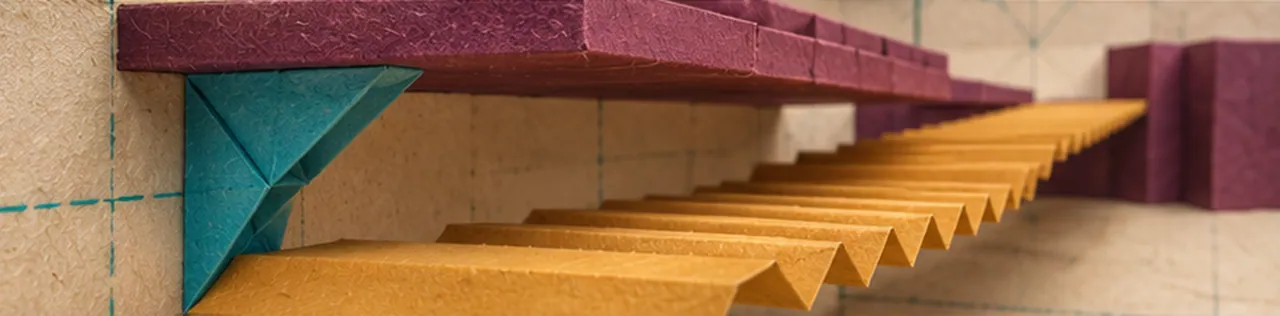
You reach a broad shelf with a shallow lip along its near side. The shelf itself is close, but a fold used on the first approach covers the place where the traveler would put a foot. The underside has a loose seam below the lip. If you tuck a folded panel beneath it, the material can travel back a short distance toward the visible side and meet a place that the traveler can reach. The Backfold Landing is an original concept built around that reversal. You finish with a crease pointing back toward the place you started.
Begin on the reverse
Start with a flat piece scored near one end and a short mark that crosses its exposed face. Stand the short leg up. Viewed from above, the long free end seems ready to cross the lip. Turn the eye under the sheet and notice how the source mark points toward a deep channel. Fold the free end back along the long panel. The mark is still useful: you can see where it wraps around the exposed edge, even after you have hidden the face it was printed on.
With the tuck near the lip, try putting one foot on the visible panel. The joint opens a little as the leg straightens. At this point the player can ease off the step, shift the paper by one mark, and check if the channel will seat the tucked fold. Holding a free end incorrectly can force the traveler to back up to the previous landing. The touch itself gives a visible response; as long as the feet stay on their earlier rests you can restore the prior fold and try a different approach.
Land beyond the blind side
The back of the shelf is pale and blunt with just a few short fiber lines. A teal seam tells you when you are looking along the board rather than toward it. A small wedge of terracotta is visible near the pocket mouth when the tuck goes far enough. Closing the last fold shifts that wedge out of view. You can still read the placement in the height of the loose edge. This sequence is intended to let the player follow an unseen part using evidence that reaches the side they can inspect.
The game world uses a series of work surfaces joined by hand-scored paper. Rooms fit together around a ledge or an overhang that invites a different view. The rail at the last station turns at a shallow angle, yielding either a backfold that needs a short sideways step or a stiffer, narrower fold that carries the traveler across in one steady move. Both let you see which corner must be held clear. There is no need to disguise the alternative with a series of nearly invisible triggers.
The first playable sample
This concept is in development as a small original prototype. The immediate goal is to see which seam players follow while attention shifts from the traveler’s foot to the hidden pocket and back. An early arrangement used two exposed marks the same length. People could lose the distinction as soon as they rotated the view. Closing one a little shorter gives the second mark a dependable place to appear. Turn the Mark Over describes this tracking problem in detail. Mountain and Valley covers the underlying crease directions that help orient the first move.